The European Accessibility Act (EAA) is an EU directive designed to make products and services across the internal market more accessible to people with disabilities. By harmonising accessibility rules across member states, the Act removes barriers created by divergent national legislation, ensuring a consistent standard throughout the EU.
Key Facts About the European Accessibility Act
- Enforcement Date: Effective 28 June 2025. Businesses are required to comply with accessibility standards.
- Purpose: To improve accessibility for people with disabilities and the elderly, ensuring equal access to key products and services.
- Scope: Applies to businesses providing both digital and physical products/services, including e-commerce, banking, transport, and ICT (Information & Communication Technology).
- E-Commerce Compliance: Online stores must be fully accessible, including clear navigation, compatibility with screen readers, and keyboard usability.
- Legal Consequences: Non-compliance may lead to fines, restrictions, or legal action under national law.
Why the Act Matters in 2026
As the European population continues to age, accessibility has become increasingly important. The EAA ensures that people with disabilities can participate fully in society, whether shopping online, using public transport, or accessing essential services.
For businesses, compliance offers multiple advantages:
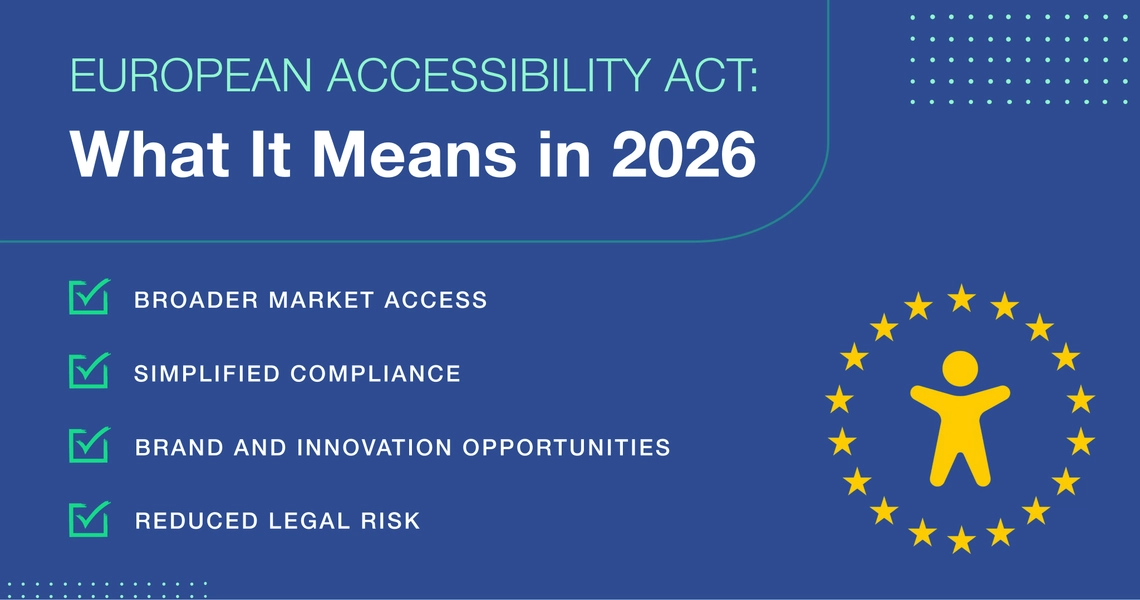
- Broader Market Access: Catering to millions of EU citizens with disabilities.
- Simplified Compliance: A unified standard across member states reduces the need to adapt to country-specific regulations.
- Brand and Innovation Opportunities: Driving the design of universally appealing products enhances brand reputation as socially responsible and encourages innovation.
- Reduced Legal Risk: Following European standards ensures automatic compliance and minimises penalties.
Compliance and Implementation
Businesses must ensure their products and services meet the accessibility standards outlined in the EAA. Each EU member state is responsible for enforcing the directive, including potential penalties for non-compliance.
While the Act sets overarching requirements, local interpretations or adaptations may vary slightly between countries. Staying informed and aligning with the European standards ensures businesses not only comply legally but also gain a competitive advantage in the market.
For businesses and organisations, the EAA is more than a legal obligation it’s an opportunity to create inclusive, accessible experiences while positioning themselves as leaders in innovation and corporate responsibility.
For more information on the European Accessibility Act, click here.