


Progressive Web App Development Ireland (PWAs)
Web applications built around the way your customers and team work.
2Cubed provides progressive web app development for businesses across Ireland. We build customer portals, product tools and connected business applications that people can access through their browser.
From a new application to added functionality for an existing website, we’ll help you decide where a PWA fits, define the features you need and plan the development and ongoing support.

What Is a Progressive Web App?
A progressive web app is a web application that can offer features such as home-screen installation and access to selected content without a connection. People can open it from a web link, with additional app features available on supported devices.
The right features depend on the task. A product catalogue, customer account or staff tool may each need a different approach. We start by identifying who will use the application, what they need to do and which devices they rely on.
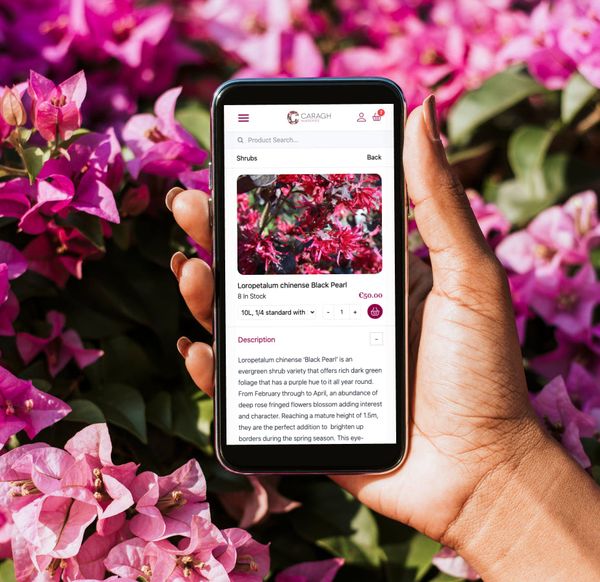
Caragh Nurseries: Connecting the Nursery and the Screen
Caragh Nurseries wanted an interactive experience alongside its existing online store. 2Cubed developed a PWA that helps customers explore the nursery and access product information.
- Interactive nursery map and QR code scanning.
- Google sign-in and a rewards points system.
- Connections supporting stock, orders and dispatch.
The project brings digital tools into the nursery visit, giving customers another way to discover and engage with its range.
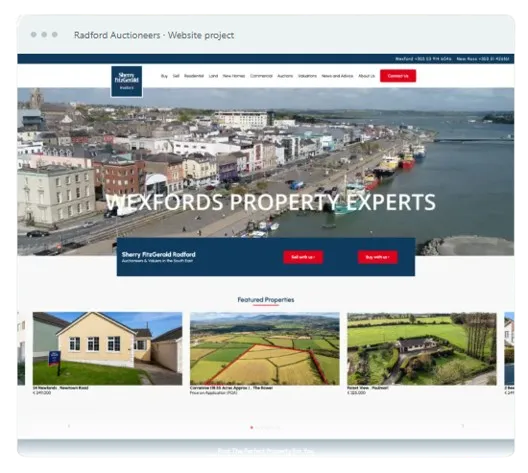
Radford Auctioneers: A Connected Property Platform
2Cubed developed a property PWA for Radford Auctioneers, connecting its website with the Reapit property management system.
- React and Next.js interface for browsing properties.
- Reapit API integration for property listings.
- Property search, filters and map features.
The integration allows property information to flow into the website, supporting the way the team manages and presents its listings.
PWA, Website or Native App: Which Do You Need?
The best choice depends on what users need to do, how often they return and the device features the application requires. A PWA is one option, rather than an automatic upgrade for every website.
| Approach | Often suits | What to consider |
|---|---|---|
| Responsive website | Explaining services, publishing content and handling straightforward enquiries. | A good starting point when an app-style workflow would add little value. |
| Progressive web app | Repeat-use tools, portals and product experiences delivered through the web. | Installation, notifications and device access vary by browser and operating system. Offline behaviour needs to be designed. |
| Native or cross-platform app | Projects that depend on deeper device integration or app-store distribution. | Assess platform capabilities, store requirements and ongoing releases. Some approaches share code across platforms. |
We’ll help you assess the requirements before choosing the technology. Contact 2Cubed or book a consultation to discuss your project.
What Can We Build With a PWA?
A PWA can suit tasks that customers or staff return to regularly. We plan the application around those tasks and the information it needs to use.
Customer and Member Portals
Give users a place to sign in, view information, manage their account or access services relevant to them.
Booking and Service Tools
Bring availability, booking requests and customer updates into a workflow that fits how your service operates.
Product Catalogues and Ordering
Help customers browse products, find information and place orders, with connections to stock and pricing systems where required.
Staff and Operational Tools
Provide access to forms, job information and dashboards, with permissions appropriate to each user’s role.
For a project focused mainly on selling products online, explore our eCommerce website design service. We can assess whether additional PWA functionality would be useful.

What Your PWA Project Can Include
We agree the requirements before development, including the application’s core tasks and any features that depend on browser support.
Interface and user journeys
Navigation, forms and screens planned around the people using the application, supported by our UX and UI design service.
Accounts and permissions
Sign-in and access controls suited to the information each user should see.
Connections to other systems
Agreed data flows for products, orders, bookings or customer records through our API development and integration services.
Offline access where useful
Selected content or tasks made available without a connection. Live stock, payments and other server-dependent actions still need connectivity unless a specific alternative is designed.
Installation and notifications
Home-screen access and optional push notifications on supported devices, with user permission where required.
Testing and release planning
Checks of key journeys, agreed devices, loading behaviour, updates and integration failures before launch.
Performance, accessibility and security depend on how the application is designed, built and maintained. They are part of the project work, rather than benefits that come automatically with the PWA label.
Our Progressive Web App Development Process
We begin with the business task and build a plan for delivering it. The scope also covers how the application will be managed and supported after launch.
1. Discovery and Feasibility
Identify users, essential tasks, existing systems and device requirements. Check whether a PWA is suitable and which features need technical investigation.
2. Structure and Design
Map the main journeys and design the screens, including account access, forms and the messages users see when something cannot be completed.
3. Development and Integration
Build the agreed functionality and connect the application to the required data sources. Plan caching and update behaviour where PWA features are included.
4. Testing and Review
Check the agreed browsers and devices, key workflows and system connections. Review offline behaviour and permissions where relevant.
5. Launch and Handover
Prepare the release, explain how to manage the application and agree the arrangements for maintenance, monitoring and future changes.
Learn more about how we plan and deliver website projects.
How Much Does PWA Development Cost in Ireland?
PWA development is priced around what the application needs to do.
Adding selected app features to an existing website is a different project from building a new customer portal with accounts, data migration and multiple integrations.
The main factors include:
- The number and complexity of user journeys.
- Account types, permissions and business rules.
- Integrations and the quality of existing data.
- Offline features, notifications and device requirements.
- Design, testing and content preparation.
Planning the Timeline and Ongoing Costs
The schedule depends on the agreed scope, access to existing systems, design feedback and testing requirements. We’ll discuss these dependencies when planning the project.
Your proposal should also make the ongoing costs clear, including hosting, software subscriptions, maintenance and any further development. Tell us what you need to build and we’ll help define an appropriate scope.

Why Work With 2Cubed on Your PWA?
Our in-house team brings interface design, website development and system integration into the same project.
The Caragh Nurseries and Radford Auctioneers examples show how that work can support different customer journeys and business processes.
We’ll help you identify the useful functionality, explain the technical choices and agree what needs to be included before the build.
After launch, your application may need updates to its dependencies, integrations and browser support as well as new features. We can discuss ongoing website maintenance and support as part of the project.
The support arrangements should make clear what is covered, how issues are reported and which changes require additional development.
Frequently Asked Questions
A Progressive Web App is a website built using modern web technologies that provides many of the features of a native mobile application. Users can install it on their device, access it from their home screen and enjoy a fast, responsive experience without downloading it from an app store.
A traditional website is accessed through a browser and requires an internet connection for most functionality. A Progressive Web App offers additional features such as installation to a home screen, offline capabilities, push notifications and significantly faster performance, creating an experience that feels much more like a mobile application.
It depends on your business goals. If you need access to advanced device hardware or App Store distribution, a native app may be appropriate. However, for many businesses, a Progressive Web App delivers the functionality customers need while reducing development costs and simplifying maintenance.
Yes. Progressive Web Apps are still websites, meaning they can be indexed by search engines like Google. When developed correctly, they can contribute to better user experience, faster loading speeds and improved mobile performance, all of which support SEO.
Yes. One of the major advantages of a PWA is its ability to continue functioning even when internet connectivity is limited. Depending on how it’s developed, users can still access important content and features while offline.
In many cases, yes. If your current website has the right technical foundation, additional PWA functionality can often be added without starting from scratch. We’ll assess your existing website and recommend the most effective approach.
Absolutely. We regularly integrate PWAs with CRM systems, ERP platforms, payment gateways, booking systems, inventory management software and bespoke business applications to create a seamless digital ecosystem.
The cost depends on the complexity of the application, required integrations and functionality. A simple customer-facing PWA will cost significantly less than a complex business platform with custom workflows and integrations. We provide tailored quotations based on your requirements.
Yes. PWAs are served over secure HTTPS connections and are built using modern web security standards. We also implement secure authentication, encrypted data transmission and best-practice development techniques to protect both your business and your users.
2Cubed has over 20 years of experience delivering bespoke web development and software solutions for organisations throughout Ireland. We design Progressive Web Apps that combine excellent user experience, robust development, SEO best practices and long-term scalability, ensuring your investment continues to deliver value as your business grows.