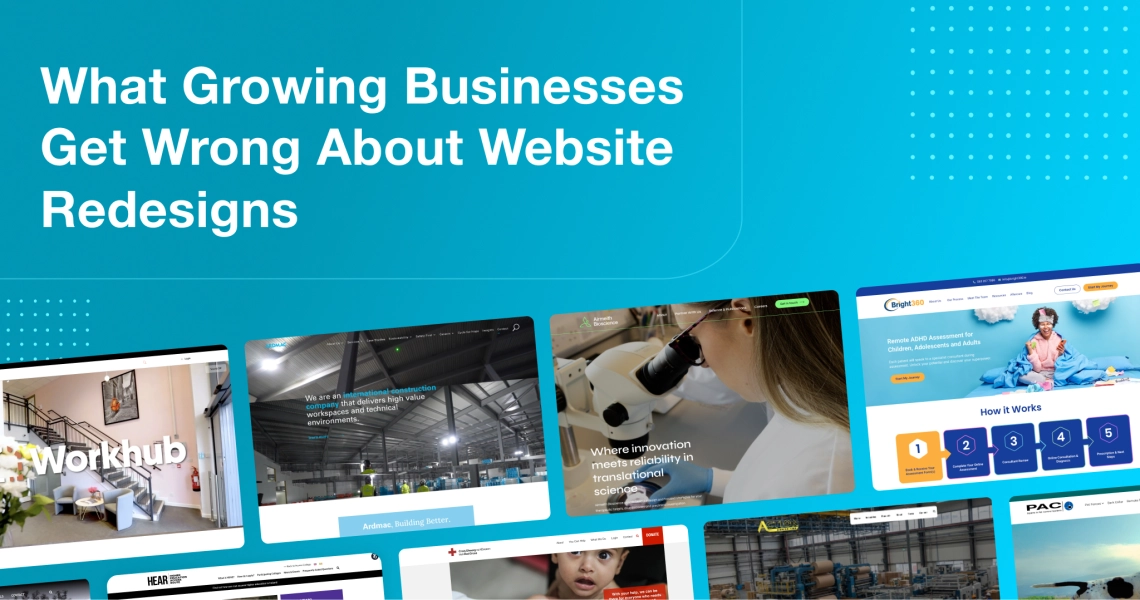
Most website redesigns start for the wrong reason.
A business feels the site looks outdated, competitors have “better” designs, or internal teams want a refresh. So the focus becomes visual change, new layouts, new colours, new content.
But for growing businesses, the real issue is rarely how the website looks. It’s how it performs as part of the business.
As companies scale, their website stops being just a marketing asset and becomes part of operations, sales, and credibility. When that shift isn’t reflected in a redesign, the result is a website that looks newer but still works the same way underneath.
- Redesigning the surface, not the structure
One of the most common mistakes in website redesigns is focusing on visuals instead of structure.
Businesses often:
- Update colours and typography
- Refresh layouts
- Add new pages
But the core issues remain:
- Unclear messaging
- Poor navigation and hierarchy
- Weak conversion paths
A better-looking site doesn’t fix a confusing user journey.
- Treating redesigns as one-off projects
Many businesses approach redesigns as something that happens once every few years.
But modern websites are not static assets they evolve with the business.
As companies grow:
- Services change
- Teams expand
- Systems and workflows become more complex
A redesign that doesn’t account for this quickly becomes outdated again.
- Ignoring how the business actually operates
A website should support operations, not sit separately from them.
Yet many redesigned sites still:
- Generate unqualified leads
- Require manual follow-ups
- Fail to connect with internal tools or workflows
This creates more admin, not less.
A properly designed website should reduce friction, not create it.
- Designing for everyone instead of the right clients
Another common issue is trying to appeal to everyone.
This leads to:
- Generic messaging
- Low-quality enquiries
- Price-driven leads
A strong redesign should do the opposite: it should filter and attract the right clients, not just more traffic.
Clarity always outperforms generality.
Conclusion
A successful website redesign should improve more than appearance it should reflect how your business operates, where it’s going and what your customers need. At 2Cubed, our web design services take a strategic approach to redesigns, focusing on structure, scalability, user journeys and business goals from the outset. Explore our Web Design services to learn how we can transform your existing website into a platform that supports your next stage of growth.