One of the most common issues we see with growing businesses isn’t a lack of capability it’s a website that stops at “functional” instead of building lasting relationships.
Many companies that come to 2Cubed are already delivering outstanding products and services. They’ve got expertise, repeat clients, and growing teams. But their website often treats visitors like one-time users instead of future advocates.
Instead of creating connection, trust, and loyalty, their online presence feels transactional. And that disconnect quietly limits long-term growth, repeat business, and the value of every client interaction.
Your Website Is More Than a First Impression
Your website rarely just “sells.” It lays the foundation for a relationship.
Visitors are silently asking:
- Can I trust this business for the long term?
- Do they understand my needs beyond the first transaction?
- Will I feel valued if I work with them?
If your site doesn’t answer these questions, visitors leave before loyalty can even begin. The ones who do engage may not become repeat clients or advocates.
The Hidden Cost of Transactional Design
Websites that only focus on immediate conversion rarely fail spectacularly they fail quietly.
Over time, this can lead to:
- Clients who don’t return after the first purchase or project
- Limited referrals and word-of-mouth growth
- Higher churn and acquisition costs
- A brand that feels competent but forgettable
None of this is obvious day-to-day, but collectively, it reduces lifetime client value and slows sustainable growth.
A Website Signals Who You Value
A well-designed website communicates not just what you do, but who you care about.
When your site focuses solely on “selling” without nurturing trust, it signals that visitors are only valuable for their first interaction. By contrast, a loyalty-focused website shows that your business values ongoing relationships, expertise, and client success.
Why This Happens to Good Businesses
This is especially common in companies that have scaled steadily:
- The website was originally built to capture leads, not nurture them
- Messaging and design focused on short-term conversions
- Long-term client experience wasn’t embedded in online strategy
Internally, relationships and service quality have evolved but externally, the website hasn’t caught up.
What a Loyalty-Focused Website Actually Does
A website designed for advocacy doesn’t push it guides. It makes visitors feel:
- “This business understands me.”
- “I want to work with them again.”
- “They make it easy to trust and engage at every stage.”
Trust replaces persuasion. Connection replaces clicks.
The Shift That Changes Client Relationships
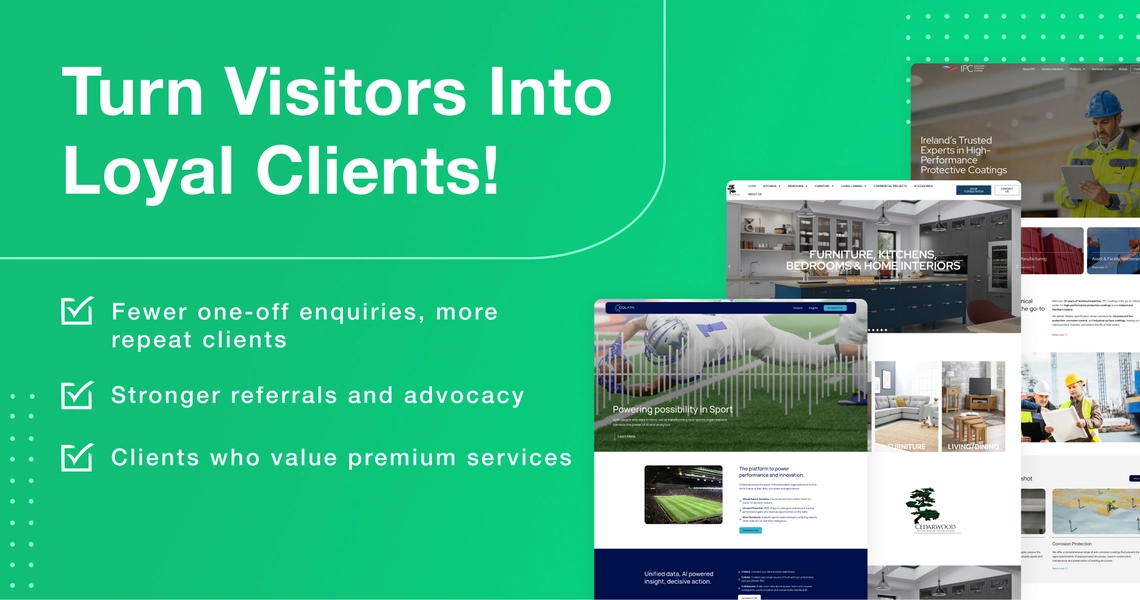
When loyalty becomes a core design principle, businesses consistently see:
- Higher repeat engagement
- More referrals and word-of-mouth leads
- Stronger long-term client relationships
- Clients who value premium offerings
Not because the business changed but because the website finally reinforced the relationships you already deliver in person.
Final Thought
If your website treats every visitor like a one-off transaction, that’s not a marketing problem it’s a design and messaging gap. Closing it can turn casual visitors into long-term advocates, creating growth that multiplies quietly and sustainably.
FAQs
How can I tell if my website is failing to build loyalty?
If repeat clients are low, referrals are minimal, or visitors don’t engage beyond the first interaction, your website may not be signalling trust and value.
Can a website really influence client advocacy?
Yes. Every touchpoint from messaging to visuals to navigation reinforces perception and encourages long-term engagement.
Is this a design problem, messaging problem, or both?
Both. Design sets the tone and experience, while messaging communicates your values and expertise. Changing one without the other rarely builds loyalty.
Do we need to overpromise to create advocacy?
No. Loyalty-focused websites don’t exaggerate they accurately reflect professionalism, empathy, and client commitment.
When should a business reassess its website for advocacy?
If your client experience has evolved, repeat engagement is lower than expected, or your website hasn’t been strategically reviewed in several years, it’s time.