WordPress plugins are often the secret weapon behind a fast, affordable website launch. For startups and small businesses, they unlock powerful features with minimal development time. But as a business grows, those same plugins can quietly become a limitation rather than an advantage.
Here’s why many growing businesses eventually outgrow their reliance on WordPress plugins and what to do instead.
Plugins Are Built for the Average Use Case
Most plugins are designed to solve a common problem for the widest possible audience. That’s great early on, but growing businesses rarely stay “average” for long.
As workflows become more complex, you may find yourself trying to bend a plugin to fit your business logic adding add-ons, workarounds, or custom hooks just to get close to what you actually need. At that point, the plugin is no longer saving time or money.
Performance Starts to Suffer
Each plugin adds code, database queries, and assets to your site. One or two plugins won’t hurt but many businesses eventually run 20, 30, or even 50+ plugins.
The result?
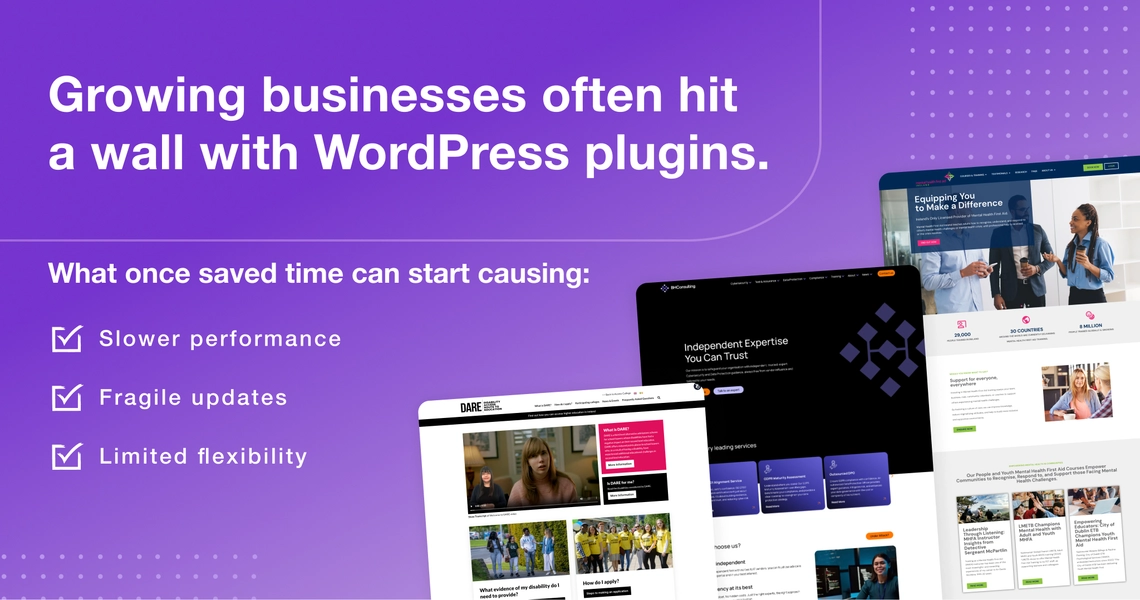
- Slower page load times
- Increased server strain
- Harder performance optimisation
Performance isn’t just a technical issue it affects SEO, user experience, and conversions. As traffic grows, plugin-heavy sites often struggle to scale efficiently.
Updates Can Break Critical Functionality
Plugins rely on a chain of dependencies:
- WordPress core updates
- Theme updates
- Other plugins
When one link changes, things can break. For businesses relying on their website for leads, sales, or bookings, a broken plugin update can mean real revenue loss.
Growing businesses need stability and predictability not crossed fingers every time an update runs.
Security Risks Multiply Over Time
Every plugin is another potential attack surface. Even well-maintained plugins can become vulnerabilities if:
- They’re abandoned by the developer
- Updates lag behind WordPress core
- Conflicts introduce unexpected behaviour
As your business grows, your website becomes a more attractive target. Security needs to be proactive, not reactive and fewer, well-understood codebases are easier to protect.
Plugins Limit True Customisation
Plugins dictate how features work, how data is structured, and how flexible your site can be. That becomes a problem when you need:
- Custom user journeys
- Advanced integrations
- Bespoke admin workflows
- Complex eCommerce or membership logic
At scale, businesses often need solutions built around their processes not the other way around.
The Shift: From Plugins to Purpose-Built Solutions
Outgrowing plugins doesn’t mean abandoning WordPress. It means using it more strategically.
Many growing businesses move toward:
- Custom-built functionality instead of off-the-shelf plugins
- Leaner plugin stacks with clear ownership
- Modular, maintainable code designed for long-term growth
This approach improves performance, security, and flexibility while keeping future development predictable.
Final Thoughts
WordPress plugins are an excellent starting point but they’re rarely the finish line.
If your website is becoming harder to manage, slower to run, or more fragile with each update, it may be a sign that your business has outgrown a plugin-first approach to WordPress.
Investing in tailored solutions isn’t about complexity it’s about building a platform that grows with your business instead of holding it back.