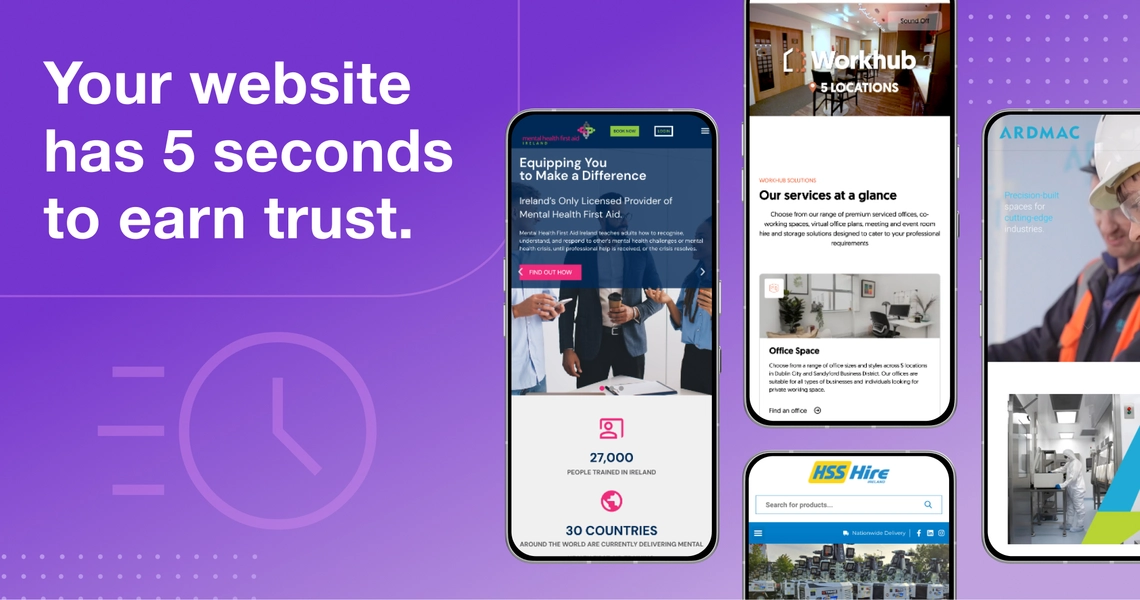
In 2026, users don’t carefully read websites. They scan, judge, and decide fast.
Within the first five seconds, most visitors have already made up their mind about whether they trust your business.
This growing disconnect between what businesses think their website communicates and what users actually feel is known as the website trust gap and it’s quietly costing companies leads, sales, and credibility.
First Impressions Are Instant (and Ruthless)
Before a user reads a single paragraph, they subconsciously assess:
- Does this site feel professional?
- Is it fast and easy to use?
- Does this business look established and trustworthy?
- Does this feel modern or outdated?
If the answer to any of those is “no”, users don’t complain. They leave.
What Users Judge in the First 5 Seconds
Trust isn’t built with one element it’s a combination of signals working together.
- Visual Clarity & Design Quality
Cluttered layouts, dated fonts, or inconsistent branding instantly raise red flags. In 2026, clean, intentional design signals competence and confidence. - Speed & Performance
A slow-loading website feels unreliable. Users now associate speed with professionalism and search engines do too. - Mobile & Accessibility Readiness
If a site is hard to use on mobile or ignores accessibility basics, users assume the business hasn’t kept up with modern standards. - Messaging That Makes Sense
Users should understand who you are, what you do, and who you help immediately. Vague headlines and buzzwords erode trust fast.
The Hidden Cost of an Outdated Website
Even if your business delivers excellent service, an underperforming website can:
- Undermine credibility before contact is made
- Reduce enquiries without obvious warning signs
- Push users toward competitors who simply feel more trustworthy
- Damage brand perception long before price or expertise is considered
This is why many businesses struggle to convert traffic the issue isn’t marketing, it’s trust.
Trust Is Now a Ranking and Conversion Factor
In 2026, trust impacts more than just users:
- Google prioritises sites with strong UX, performance, and accessibility
- AI-driven search favours clear, authoritative, well-structured websites
- Users expect transparency, clarity, and professionalism by default
Trust isn’t a “nice to have” anymore it’s a core performance metric.
Closing the Trust Gap
Modern websites are designed to reassure before they persuade. They combine:
- Strong visual hierarchy
- Fast, accessible performance
- Clear, confident messaging
- Real proof of case studies, testimonials, and examples
- A seamless experience across every device
When these elements work together, users don’t have to think about trusting your business it feels natural.
If you’re not sure what your website is saying about your business in those first five seconds, it may be time for a closer look.
👉 Talk to 2Cubed about building a website that earns trust instantly and converts with confidence.