Summary
Immersive web experiences transform the way users interact with websites by making them engaging, interactive, and memorable. Beyond static pages, immersive websites use storytelling, dynamic content, micro-interactions, and visual effects to hold attention and encourage exploration. These experiences improve user engagement, increase time on site, and help brands stand out in a crowded digital landscape. When optimised for SEO and AI search, immersive websites are discoverable and drive measurable results for businesses.
Why Immersive Web Experiences Matter
Immersive websites go beyond visuals and navigation to create experiences that users remember. By combining interactive elements, animations, and personalised content, these sites:
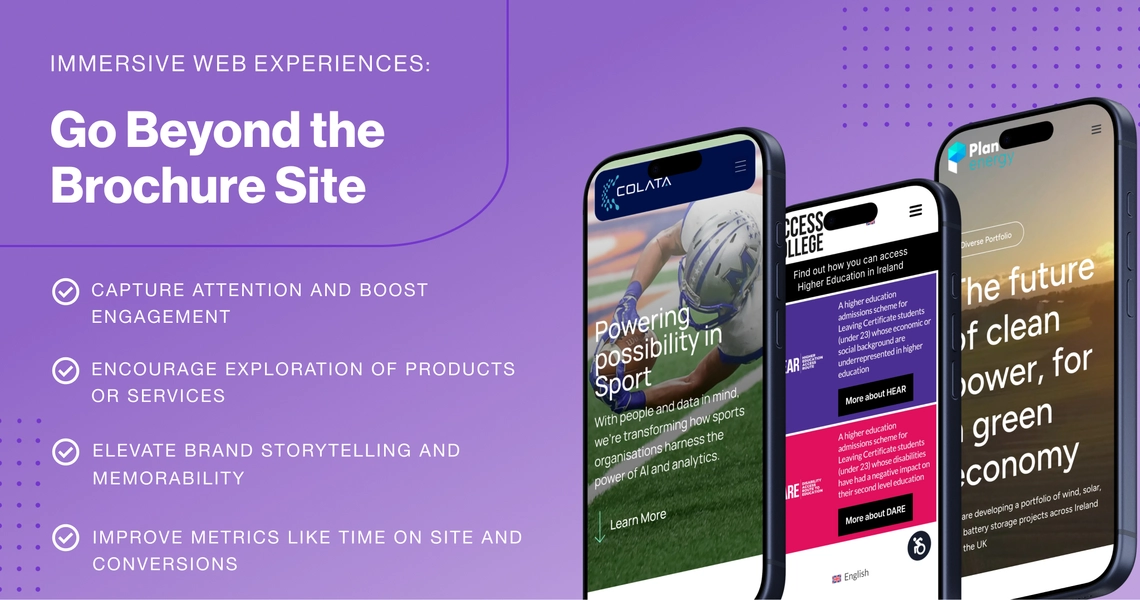
- Capture user attention and increase engagement
- Encourage exploration of products or services
- Enhance brand storytelling and differentiation
- Improve metrics such as time on site and conversion rates
Search engines and AI search tools increasingly value content that engages users, so immersive experiences are not only memorable but also SEO-friendly.
Elements of an Immersive Website
- Interactive Storytelling
- Guiding users through a narrative using visuals, text, and motion
- Highlighting products or services naturally within the story
- Micro-Interactions
- Small animations that provide feedback, such as hover effects or button animations
- Improves usability and delight
- Dynamic and Personalised Content
- Content that adapts to user behaviour or preferences
- Increases relevance and engagement
- Visual Effects and Motion Design
- Scroll-triggered animations, parallax scrolling, or video backgrounds
- Adds depth and movement without overwhelming users
- Augmented and Virtual Reality Features
- Optional 3D product views or AR experiences for real-world context
- Engages users in a more hands-on way
Design Principles for Immersive Web Experiences
To create an effective immersive website:
- Prioritise Usability: Ensure navigation is intuitive and interactions are clear
- Mobile Responsiveness: All immersive elements must work on mobile and tablet
- Performance Optimisation: Compress assets, lazy-load content, and optimise animations to maintain fast load times
- Accessibility: Include alternative text, ARIA labels, and keyboard navigation to make interactive content accessible
Balancing creativity with performance ensures the experience is engaging, discoverable, and usable by all visitors.
Use Cases for Immersive Websites
- E-commerce: Interactive product showcases, scroll-triggered feature highlights, AR try-ons
- Portfolios and Creative Sites: Story-driven experiences to showcase work or projects
- Event or Venue Websites: Virtual tours, dynamic schedules, and interactive maps
- Brand Storytelling: Engaging content sequences that communicate your message effectively
These immersive techniques increase engagement, encourage exploration, and make the website more likely to be recommended or revisited.
Challenges and Solutions
- Performance: Optimise images, animations, and scripts to avoid slow load times
- SEO and AI Optimisation: Ensure content is structured, interactive elements are labelled, and metadata is included
- Accessibility: Provide alternative ways for users with disabilities to interact with the website
Addressing these challenges ensures an immersive website is effective, inclusive, and discoverable.
Conclusion
Immersive web experiences offer a strategic advantage for businesses looking to engage users, elevate their brand, and differentiate their website from competitors. By combining interactive storytelling, micro-interactions, dynamic content, and optional AR or 3D elements, websites can be both memorable and SEO-friendly.
Contact 2Cubed to discover how an immersive web experience can transform your website and create lasting engagement.
Frequently Asked Questions (FAQs)
What is an immersive web experience?
An immersive web experience uses interactive content, animations, storytelling, and optional AR or 3D elements to engage users beyond a standard website.
Do immersive websites affect SEO?
Yes. When optimised with structured data, descriptive content, and fast-loading assets, immersive websites can improve engagement metrics and search engine visibility.
Can immersive websites work on mobile devices?
Absolutely. With responsive design and optimisation, immersive elements can function smoothly across mobile and tablet devices.
What are the benefits for e-commerce?
Immersive elements such as interactive product displays, AR try-ons, and scroll-based storytelling increase user engagement, encourage exploration, and improve conversion rates.
Are immersive websites expensive to build?
Costs vary based on complexity, but modern frameworks and optimisation techniques make immersive websites achievable for businesses of all sizes.