Most Irish SMEs are busy with digital marketing. They are rarely effective at it. A social post goes out on Tuesday, a Google Ad runs for a month, a blog gets published whenever someone finds the time, and somehow none of it connects to a consistent pipeline of leads. The problem is not effort. It is architecture.
Working with a reputable digital marketing agency in Ireland, you will hear the same diagnosis repeatedly: businesses are running tactics, not strategy. Each channel operates in isolation, competing for budget and attention rather than reinforcing a single, coherent commercial goal.
This tutorial argues for a different approach. A coordinated channel mix, where SEO builds long-term visibility, content moves prospects through consideration, and paid media fills short-term gaps, consistently outperforms any single channel in isolation. The methodology is replicable.
In the sections that follow, you will learn why scattered tactics produce motion without progress, what a structured channel mix actually looks like in practice, and how to build one using a staged framework that matches your current resources and growth ambitions.
Why Scattered Tactics Produce Motion Without Progress
Most Irish SMEs are not inactive online. They have a website, they post on social media when time permits, and they run occasional Google Ads when leads dry up. The problem is not the absence of activity. It is the absence of connection between that activity.
The pattern has a recognisable shape: a functional website, sporadic social posts, and paid ads that do not reflect the brand or speak to the same audience the website was built for. Individually, each element looks like marketing. Collectively, they produce no consistent pipeline.
The reason is a confusion between activity and strategy. Activity describes what you are doing across channels. Content Strategy describes who you are reaching, what you want them to do, and how you will measure whether it worked. Activity answers none of those questions. Most Irish SMEs have plenty of the former and very little of the latter.
This confusion is expensive at any scale. For SMEs operating with constrained budgets, it is particularly damaging. When channels do not reinforce each other, spend does not compound; it dissipates. A Google Ads campaign sending traffic to a website with no clear message wastes every click. Social posts building no connection to SEO or email contribute nothing measurable. And no single channel, run in isolation, carries enough volume to sustain consistent lead generation on its own.
The following sections define what that architecture looks like and how to build it.
What a Coordinated Channel Mix Actually Means
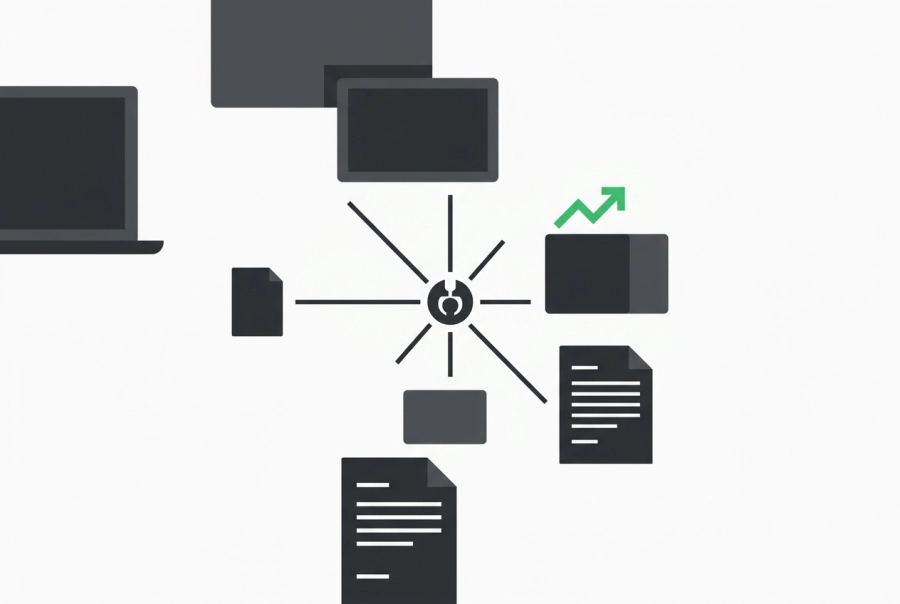
A channel mix is an intentional allocation of budget, effort, and sequencing logic across digital channels. The emphasis is on sequencing: designing how channels interact, hand off to each other, and collectively move a prospect through a decision. Using multiple channels simultaneously is not the same thing.
The distinction matters more than it appears. Posting on LinkedIn in the same month you run a Google Ad is parallel activity. Both things are happening, but they share no audience logic, no common goal, and no mechanism for one to reinforce the other. A prospect who sees your ad and then lands on a website that contradicts your LinkedIn messaging does not experience a funnel; they experience friction. Coordination eliminates that friction by design.
The Three Functional Layers
A coordinated mix operates across three layers, each with a distinct job:
- Visibility: Getting found by prospects who are actively searching. SEO and Google Business Profile are the primary channels here. Their job is ensuring you appear at the right moment, for the right queries, in the right locations.
- Consideration: Building trust and educating prospects who have found you but are not yet ready to enquire. Content marketing and email carry this layer, answering the questions that move someone from awareness to intent.
- Conversion: Capturing and following up on demand. Google Ads target high-intent searches directly; retargeting reconnects with prospects who visited but did not act. Together, they close the gaps that organic and content channels leave open.
Each layer feeds the next. Visibility without consideration produces traffic that leaves. Consideration without conversion captures interest that never becomes an enquiry. Conversion without visibility runs out of new prospects to reach.
The Core Insight for Irish SMEs
The goal is not to be present on every channel. It is to have the right channels working in sequence, each one moving a prospect measurably closer to contacting you. Multi-touch attribution models exist precisely because different channels play different roles in a buyer’s journey, and crediting only the final touchpoint misrepresents how decisions are actually made. For resource-constrained Irish SMEs, that sequencing logic is what converts limited budget into consistent results.
Why Digital Advertising Is Now a Competitive Necessity in Ireland
Understanding the channel mix structure is essential, but there is a prior question many Irish SMEs have not honestly answered: is digital advertising actually necessary for a business of our size?
The answer, in 2026, is yes. Irish SMEs on Google search increasingly face competition from operators beyond their immediate geography, including UK and European businesses targeting the same queries. Treating digital advertising as a discretionary spend in that environment means ceding search visibility to competitors who have already decided it is not optional.
The cost-effectiveness argument is compelling precisely because of scale. Businesses can target buyers who are actively searching for their specific service, in their specific geography, and pay only when that buyer clicks. That level of precision is simply not available through traditional media, and the returns are measurable rather than estimated. For businesses that want to understand how geographic visibility connects directly to revenue, our analysis of why Google Maps visibility is now a revenue decision for Irish businesses sets out the stakes clearly.
Organic search remains valuable, but competition for top positions has intensified considerably. Waiting twelve months for SEO to compound while a competitor captures demand with paid media is not a conservative approach; it is a costly one. Paid media fills the gap while organic results build.
On budget: the practical benchmark for Irish SMEs is 5 to 10 percent of annual revenue. Businesses protecting cash flow or testing channels should target the lower end. Those with proven channel results and a mandate to scale should allocate closer to 10 percent.
The critical qualifier is context. Paid media performs best when it is amplifying an already-functioning organic and content presence. When it is the only active channel, it carries the full weight of generating and converting demand alone, which is expensive and rarely sustainable.
The Crawl-Walk-Run Framework for Building Your Channel Mix
Knowing you need to invest in digital advertising is one thing. Knowing when and in what order is what separates SMEs that get results from those that burn through budget and conclude the channel is broken.
The crawl-walk-run framework provides that sequencing logic. Rather than activating channels based on what sounds promising, it stages adoption so that each layer is functional before the next is built on top of it.
Why sequence matters more than channel selection: Running Google Ads before your website converts visitors into enquiries is like filling a leaking bucket. Investing in content before analytics tracking is configured means you cannot tell what is working. In both cases, spend generates activity but not learnable data, and without data, you cannot improve.
This is the actual explanation behind one of the most common frustrations heard from Irish SMEs: “we tried Google Ads and it didn’t work.” In the majority of cases, the channel was not the problem. The foundation layer was missing. A website that fails to build trust and convert visitors within seconds, or a campaign with no conversion tracking in place, will underperform regardless of budget or targeting quality.
The framework organises the entire channel mix into three stages: crawl (foundation), walk (primary channels), and run (scale). Each stage is covered in the sections that follow.
Stage One (Crawl): Building the Foundation Before Spending a Euro on Ads
The foundation stage has one job: ensure that when traffic arrives, the site earns the enquiry. Without it, every channel you activate later is feeding a leaking funnel.
Your website comes first. It must load quickly on mobile, present clear service pages, and offer an obvious conversion path: a contact form, a visible phone number, or a quote request button. If a prospect lands and cannot immediately understand what you do or how to reach you, the channel that brought them there has wasted its budget.
Install measurement before you spend anything. Google Analytics 4 and Google Search Console should both be configured and verified before any paid activity begins. You cannot identify which channels are working, which pages are converting, or where prospects are dropping off without baseline data. Setting these up takes a few hours and costs nothing; skipping them costs every euro you subsequently spend on ads.
Claim and complete your Google Business Profile. For any Irish SME serving a local customer base, this is the single highest-return action available. Verify your listing, populate it with your accurate address, an Irish phone number, service areas, opening hours, and actively gather recent reviews. An incomplete or unverified profile surrenders local visibility to competitors who have done the basic work. For more on how local search has evolved, local SEO strategies for Irish businesses post-Google updates covers the current ranking factors in detail.
Clarify your brand message before any channel goes live. Define who you serve, what problem you solve, and why a customer should choose you over alternatives. Without this, your ads say one thing and your website says another, which is the direct cause of the “ads that don’t match the brand” failure mode documented repeatedly in underperforming Irish SME campaigns.
Add Irish trust signals throughout your site. A local phone number, a visible Wexford or Dublin address, and Irish client testimonials are not decorative; they function as both conversion factors and local SEO ranking signals. Prospects evaluating two similar businesses will contact the one that reads as local, accountable, and already trusted by someone they can relate to.
Stage Two (Walk): Activating the Primary Channels
With the foundation in place, the walk stage is where you begin generating visible returns.
Local SEO is the first channel to activate. Optimise each service page for location-specific queries, such as “accountant Wexford” or “IT support Dublin,” and build supporting content around topics your customers are already searching. Earn citations from Irish business directories, industry associations, and local listings. This visibility layer compounds over time; unlike paid media, rankings you earn continue working without ongoing spend. For a deeper look at how local search has shifted, the evolving landscape of local SEO in 2025 and AI-driven search is worth reading before you build your page structure.
Content marketing serves a different but complementary function. Blog posts, guides, and case studies should not be produced for their own sake. Map each piece to a stage of the buying decision: awareness content answers broad questions, consideration content compares options, and decision-stage content addresses objections and demonstrates outcomes. Content that matches search intent builds trust and moves prospects toward an enquiry without requiring ad spend to do it.
Google Ads fills the gap that SEO cannot cover immediately. Search campaigns targeting high-intent queries, built around the same keyword set your SEO strategy uses, capture demand from buyers who are ready now. Running paid and organic in parallel is not redundant; paid catches searchers your organic rankings have not yet reached, and organic reduces your cost per lead as rankings mature.
SEO typically builds durable visibility over a period of months, depending on competitiveness and domain authority; paid media generates leads during that build period and continues capturing demand beyond what organic alone can reach. Neither replaces the other.
This is also the stage where working with a digital marketing agency in Ireland delivers the greatest leverage. Technical SEO and Google Ads campaign management both require specialist expertise and ongoing optimisation that most in-house teams cannot sustain alongside the rest of the business.
Stage Three (Run): Scaling With Email, Social, and Retargeting
With SEO and paid media running, the next layer adds channels that convert more of the demand you are already generating.
Email is the highest-ROI channel available to an Irish SME once a list is in place. Research from Litmus puts average return at $36 for every $1 spent (Litmus, 2024). The practical application is three sequence types: an enquiry follow-up that responds within minutes and walks prospects through next steps, a nurture sequence for leads not yet ready to buy, and a re-engagement campaign for past customers. Each sequence uses the content your SEO strategy has already produced, so nothing is built from scratch.
Organic social, particularly LinkedIn for B2B Irish SMEs, earns trust rather than generates leads directly. Treat it as a credibility layer: share case studies, publish short-form insight, and amplify your blog content to the audience most likely to vet you before making contact. Expecting organic posts to produce enquiries sets the channel up to disappoint; expecting them to shorten the trust-building process sets a realistic, achievable standard.
Retargeting addresses the majority of website visitors who leave without enquiring. By segmenting audiences based on which pages they visited, you serve ads that are directly relevant to their demonstrated interest. A visitor to your services page sees different messaging to someone who read a blog post. Retargeting reconnects with warm prospects at considerably lower cost than cold acquisition because the awareness work is already done.
These three channels only function well when the foundation is intact, particularly the tracking pixels and content assets built at the crawl stage.
Run each of these within 90-day planning cycles. Define a specific goal, assign budget per channel, and hold a performance review at the end of each cycle. This replaces open-ended activity with accountable sprints and ensures spend is redirected toward what is producing real enquiries. If you are still evaluating what investment in digital infrastructure actually involves, the breakdown in our guide to web design prices in Ireland provides useful context before committing to the run stage.
How to Diagnose Which Channel to Prioritise First
Before choosing which channel to add next, identify which constraint is actually limiting your results. There are three, and they sit in sequence.
Visibility means prospects cannot find you at all. Indicators: low organic traffic, your business absent from local Google results, your Google Business Profile incomplete or unverified. The fix is local SEO and a fully populated Google Business Profile before any paid spend. Paying to send traffic to a business that cannot be found organically solves nothing upstream.
Positioning means traffic exists but is not converting to enquiries. Indicators: high bounce rates, low enquiry rates relative to visits, and sales calls where prospects reveal confusion about what you actually offer. If you recognise this pattern, the section on getting traffic but not enough enquiries is worth reading before scaling any channel. The fix is messaging clarity, content that explains your value, and a website restructure, not more ad budget.
Conversion means enquiries arrive but a high proportion do not become clients. Indicators: leads going cold, inconsistent follow-up, and a noticeable drop between initial contact and closed business. The fix is email sequences and a reliable CRM process. Adding top-of-funnel volume before this is fixed produces more wasted enquiries, not more revenue.
The reason this diagnostic matters is straightforward. Most Irish SMEs respond to stalled results by increasing budget or testing a new channel. In the majority of cases, the actual constraint sits one layer upstream. Spending more on Google Ads does not fix a positioning problem. Publishing more content does not fix a broken follow-up process. Identifying the correct constraint first is the single highest-leverage step in SME digital marketing, because it directs every subsequent decision in the right direction.
Measuring a Multi-Channel Mix Without Enterprise-Level Analytics
Once you have identified your primary constraint and know which channel deserves investment, the next challenge is knowing whether that investment is working. In a coordinated channel mix, this is harder than it sounds.
A single lead may have found you through an organic search, read a blog post, clicked a retargeting ad three days later, and then submitted a contact form. Standard last-click attribution credits only the final touchpoint, making the retargeting ad look decisive while the SEO and content that built the context go unrecorded. For Irish SMEs allocating a limited budget, that misreading can cause you to cut the channels doing the most work.
The practical fix does not require enterprise software. Add UTM parameters to every paid and email link so Google Analytics 4 can distinguish traffic sources accurately. Check assisted conversions in GA4 alongside last-click data; the Advertising section shows which channels appeared earlier in the conversion path even when they did not close it. And ask every new enquiry directly how they heard about you. A simple intake question captures intent signals no analytics platform reliably tracks.
Measure each channel layer on its own terms:
- SEO: organic sessions and keyword ranking positions
- Paid: cost per lead and conversion rate
- Email: open rate and click-to-enquiry rate
- Overall: total enquiries and revenue, the metric that makes every channel accountable to the same business outcome
Review these figures monthly, not quarterly. A channel producing poor results for 90 days undetected wastes budget that could be reallocated. Monthly reporting catches underperformance early and lets you shift spend toward what is generating real enquiries.
Most SMEs without a dedicated marketing resource cannot sustain this cadence alongside day-to-day operations. A digital agency with the capability to handle both SEO and paid media under one roof, providing monthly performance reviews and reallocation recommendations, removes that bottleneck and keeps the channel mix accountable to revenue rather than activity.
Why Most Channel Mix Strategies Stall and How to Avoid It
Knowing what to measure is one thing; sustaining execution long enough for those measurements to mean something is another. Most channel mix strategies do not fail because the plan was wrong. They fail at the point of doing.
The strategy-on-a-shelf problem is the most common failure mode. A plan is produced and filed. No one is named as owner for each channel, no review dates are locked into the calendar, and within weeks the day-to-day business absorbs all available attention. The fix is structural, not motivational: assign a named owner per channel and schedule quarterly review dates before the plan launches, not after.
Premature tooling compounds the problem. Following the crawl-walk-run sequence and introducing software only when you can name the specific problem it solves avoids the overhead that consumes both budget and bandwidth before the fundamentals are working.
Budget volatility undermines compounding. Switching channels on and off based on monthly cashflow disrupts SEO’s long-term accumulation and resets the learning algorithms that paid media relies on to optimise towards conversions. A sustained period of consistent spend is the minimum effective commitment for most channels. Treating digital marketing as a cost to cut in a slow month guarantees it never builds momentum.
Activity reports are not strategy. An agency that delivers impressions and click data without connecting those numbers to enquiries and revenue is reporting channel activity, not business performance. The right standard for any digital marketing agency in Ireland is accountability to outcomes: leads generated, cost per enquiry, and revenue influenced.
Siloed providers create structural gaps. The in-house vs. outsource section below addresses how to structure accountability across vendors.
Scoping What to Keep In-House Versus What to Outsource
Siloed vendors create handoff failures. But even with an integrated agency partner in place, Irish SMEs still need clarity on what stays internal and what gets delegated.
What a marketing manager or business owner should own: strategy direction, brief creation, content approval, and performance review. These require business context that no external partner can replicate. What they should not be expected to do simultaneously is execute technical SEO, manage paid campaigns, and build email automation. That combination demands three distinct specialist skill sets, and stretching one person across all of them produces mediocre results across the board.
Outsource technical SEO and paid media first. Both compound with experience; a specialist who has managed hundreds of campaigns or audited dozens of sites will outperform a generalist in months, not years. Both also carry direct cost consequences when done incorrectly. A misconfigured Google Ads campaign burns budget daily. A technical SEO error can suppress rankings for months before it is identified. These are not functions to learn on the job with live spend.
Build content, social, and email in-house over time. Once the channel mix is stable and producing results, content production, social media management, and customer email communication are transferable to an internal resource. Keeping them outsourced indefinitely inflates agency costs without developing any internal capability. The transition should be planned, not reactive.
For businesses working with 2Cubed, a web design and digital agency operating across Wexford and Dublin, web design, SEO, and digital marketing sit under one roof. The handoff problem between a website build and its SEO implementation does not arise, because the same team owns both.
For businesses not yet ready for a full-time marketing hire, the fractional CMO model is worth considering. Engaging a senior strategist part-time to own the channel mix framework, while a specialist agency handles execution, is a practical middle ground at the walk-to-run transition.
Building a Channel Mix That Works for Your Business
Once you have resolved the in-house versus outsourced question, the structural work is largely done. What remains is committing to the logic this entire guide has laid out.
Consistent lead generation does not come from doing more across more channels. It comes from sequencing the right channels, diagnosing the right constraint, and measuring the right outcomes at regular intervals. The sequencing, the diagnostic logic, and the 90-day review cadence are what separate genuine progress from sustained motion.
The actionable sequence is straightforward:
- Audit your current digital presence against the three foundation requirements: a converting website, configured analytics, and a complete Google Business Profile
- Identify your primary constraint, whether that is visibility, positioning, or conversion, before allocating any additional budget
- Stage your channel investment using the crawl-walk-run framework, building the foundation before activating primary channels, and scaling only once those channels are performing
- Run 90-day cycles with fixed performance reviews tied to business outcomes, not channel activity metrics
Treating digital channels as a connected system, rather than a collection of independent tactics, is the structural shift that delivers consistent improvement.
2Cubed works with Irish SMEs across every industry to build and execute coordinated digital marketing strategies. From website design and SEO through to content and paid media, 2Cubed operates as a single accountable partner, eliminating the handoff failures that arise when web, search, and advertising are managed by separate vendors. If consistent lead generation is the goal, a connected system is where it starts.

Conclusion
Consistent lead generation does not come from doing more. It comes from doing the right things in the right order, connected as a single system.
The framework is complete; what remains is the commitment to execute it.
If your digital marketing feels busy but inconsistent, the system is the problem, not the effort.
Start by auditing your foundation today. Identify your primary constraint, stage your investment, and build the connected system your business deserves. 2Cubed is ready to help you do exactly that,.