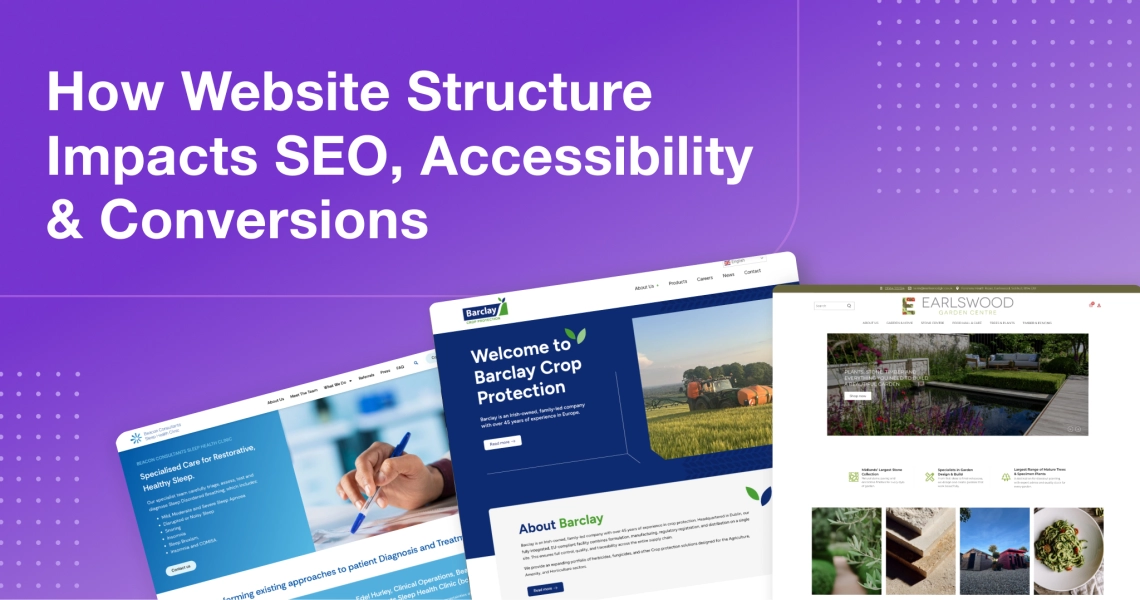
Website performance isn’t only about how a site looks or what it says it starts with how it is structured.
A well-designed website structure acts like a blueprint. It guides users, helps search engines understand your content, and ensures accessibility tools can interpret your pages correctly. When a structure is weak, everything built on top of it suffers.
Why Website Structure Matters
A website’s structure defines how pages are organised, linked, and prioritised. This includes navigation menus, URL hierarchy, internal linking, and content grouping.
When this is done well, users can move intuitively through your site. When it’s done poorly, they get lost and so do search engines.
Impact on SEO
Search engines rely heavily on structure to understand context and relationships between pages.
A clear structure helps:
- Search engines crawl your site efficiently
- Important pages gain authority through internal linking
- Content relevance is easier to interpret
- Indexing becomes more consistent
Poor structure leads to:
- Orphan pages (pages with no internal links)
- Keyword cannibalisation
- Weak ranking signals across the site
Impact on Accessibility
Accessibility tools such as screen readers depend on logical structure.
A well-structured site ensures:
- Proper heading hierarchy (H1, H2, H3)
- Predictable navigation patterns
- Logical reading order
- Easier interaction for assistive technologies
When structure is messy, users relying on accessibility tools face unnecessary barriers — which can make content unusable.
Impact on Conversions
Structure directly affects how users move toward action.
Good structure:
- Reduces friction in decision-making
- Makes key pages easier to find
- Guides users naturally toward enquiries or purchases
- Builds trust through clarity
Bad structure creates confusion, and confusion reduces conversions.
Final Thought
The right website structure creates a stronger foundation for everything that follows, from search visibility and accessibility to user experience and conversions. At 2Cubed, our web design services take structure into account from the outset, creating clear, intuitive websites that work effectively for users and search engines alike. Explore our Web Design services to learn how we build websites with performance, usability and long-term growth in mind.